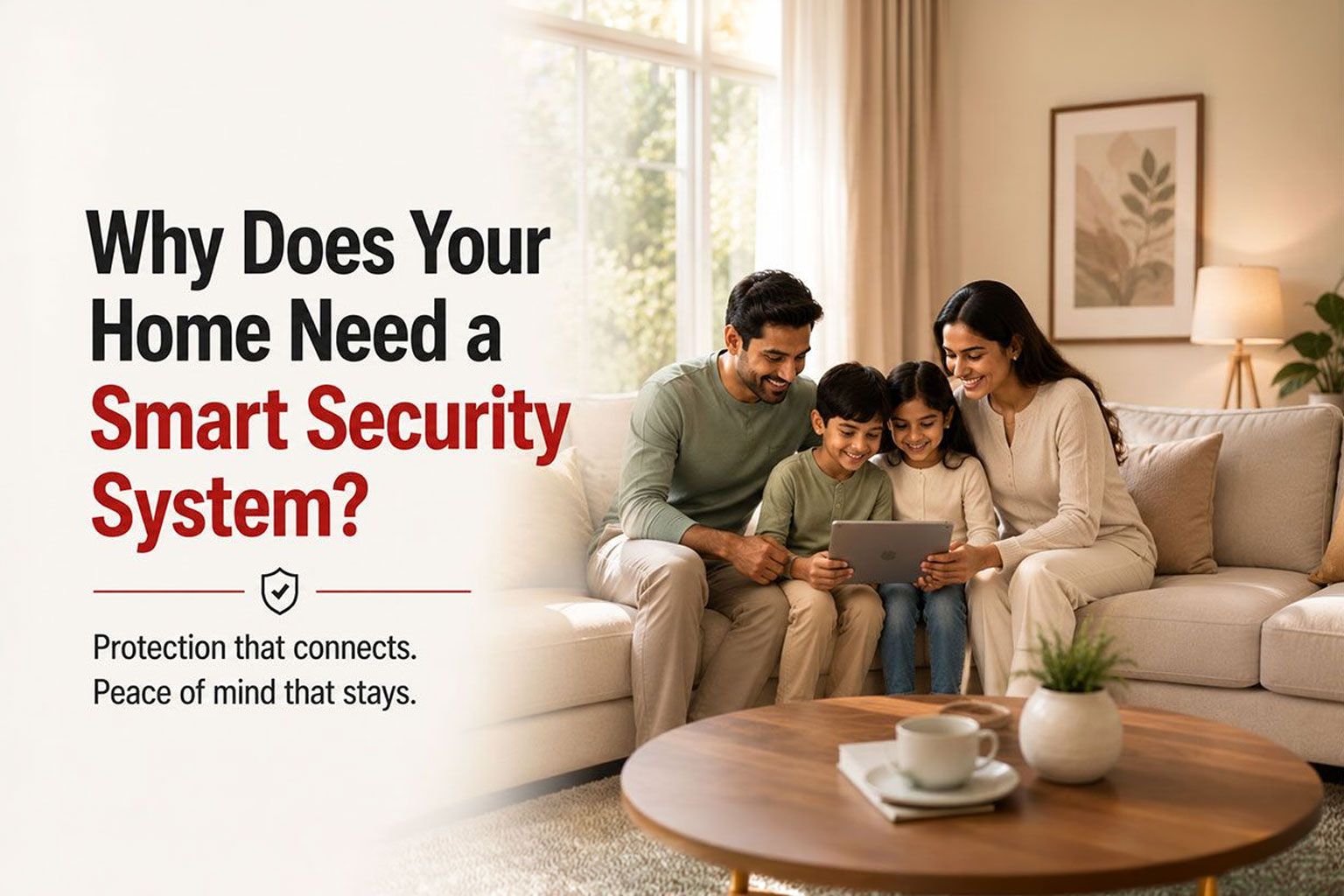

The front door is locked, the balcony door has been checked twice and a CCTV camera watches the gate. Before leaving for a holiday, the family asks a neighbour to collect deliveries and keep an eye on the house. It feels like a sensible arrangement—and it is. Yet one question remains: if someone tries to enter at 2 a.m., who will notice in time, and what will happen next?
That gap between seeing a threat and acting on it is where modern home security becomes valuable. Locks, cameras and neighbours all have a role, but they do not automatically create a response. A connected system is designed to bring the pieces together, so a warning does not end as a notification sitting unnoticed on a phone.
What Is a Smart Security System and How Does It Work?
A smart security system is a connected set of devices and services that work together to protect a property. Door and window sensors can recognise an unexpected opening. Motion detectors can identify movement in a protected zone. Smart cameras can provide visual information, while a control panel communicates the event to the people or team responsible for monitoring it.
The important word is connected. A camera purchased from one provider, an alarm from another and a sensor that only sends an app notification may all be useful, but they may still behave like separate gadgets. A complete smart security solution gives each component a role in the same process: deter, detect, alert, monitor and respond.
VProtect: A Connected Smart Security Solution for Indian Homes
VProtect approaches home protection as an ecosystem rather than a collection of devices. Its model brings smart wireless sensors, AI-enabled surveillance, professional monitoring and response support into one connected process. Customisable protection zones allow the security setup to focus on the parts of a property that matter, while a privacy-conscious approach helps families maintain control over their living spaces.
The difference is practical. A device can generate an alarm; a connected service can monitor that alarm, assess the event and coordinate the next step. VProtect also highlights beat patrolling and on-ground coordination as part of its broader response approach.
As a smart security solution, VProtect connects warnings from the property with professional attention and an organised next step. The security process, not the number of devices is what makes the setup useful in everyday life.
Why Basic Security Measures May Not Be Enough
Traditional precautions still matter. A strong door, good lighting, reliable locks and sensible access control can discourage opportunistic intrusion. CCTV can show who approached the property and provide useful evidence. The weakness appears when these measures are expected to do a job they were not designed to do.
A lock cannot tell the family that someone is tampering with a rear window. A camera may record a person at the gate, but the recording does not help immediately if nobody is watching. A local alarm may make noise, yet it may be ignored or go unheard. Even a mobile alert can be missed during a meeting, on a flight or while the homeowner is asleep.
How Does a Smart Security System Protect Your Home?
A smart system protects a home by linking an event to action. The exact process depends on the provider and the devices installed, but a well-planned setup generally follows six stages:
1. A sensor or smart camera detects an unusual event in a protected area.
2. The system raises an alarm or sends an immediate alert.
3. The event reaches the homeowner, a professional monitoring team or both.
4. The available information is assessed to understand what may be happening.
5. The homeowner is contacted according to the agreed security procedure.
6. The appropriate response is coordinated, including on-ground support where the service is available.
Consider a family travelling outside the city. A door sensor detects an unexpected opening after the system has been armed. Instead of relying only on the homeowner seeing a notification, a monitored setup creates an additional path for the event to be assessed. The same principle helps when children return from school before their parents, an elderly person needs assistance, or suspicious movement is detected near a gate or driveway.
Essential Security Devices for Home and What They Do
The right mix of security devices for home depends on the property. An apartment with one main entrance has different needs from an independent house with a terrace, driveway, back door and accessible windows. The following devices commonly form part of a connected setup:
- Door and window sensors detect unexpected opening or tampering at likely entry points.
- Motion detectors identify movement inside selected protection zones.
- AI-enabled cameras support visual awareness and help assess suspicious activity.
- Outdoor or driveway cameras extend visibility beyond the main door and can cover approach areas.
- Smoke and heat detectors provide early warning of fire-related danger.
- An alarm or siren warns occupants and may discourage an intruder from continuing.
- A panic or SOS button allows a family member to request attention quickly.
- A central control panel connects devices and communicates alerts.
- A keyfob or mobile conrol makes it easier to arm, disarm or manage the system.
- Power and communication backup help the setup remain dependable during interruptions, according to the system’s specifications.
No single device does everything. A camera contributes visual information; a sensor provides focused detection; an alarm attracts attention; monitoring adds human assessment; and response turns information into action. Together, they create a smart surveillance system that is more useful than isolated equipment.
Choosing security devices for home should begin with coverage, not quantity. A well-planned combination at genuine risk points is more useful than disconnected devices without a clear security plan.
Why Professional Monitoring Strengthens a Smart Surveillance System
Professional monitoring matters because homeowners cannot watch their cameras or phones every minute of the day. A notification may arrive while someone is driving, sleeping, working in a restricted area or travelling without reliable connectivity. If the entire security plan depends on one person noticing one alert, the system still has a weak point.
In a professionally monitored arrangement, the alarm is also communicated to a trained team. The team follows an established procedure to assess the event, contact the homeowner where required and coordinate the next step. This is different from promising that every alert is a confirmed threat. Sensible monitoring is about evaluating available information and responding proportionately.
It can also reduce confusion during a stressful moment. The family knows who receives the signal, how they may be contacted and what support is available. Where included in the plan and service area, beat patrolling and on-ground coordination add a physical response layer that a standalone camera cannot provide.
How to Choose the Best Smart Security System for Your Home
The best smart security system is not automatically the one with the most cameras. It is the system that matches the property’s layout, covers realistic vulnerabilities, respects the family’s privacy and connects alerts to a dependable monitoring and response process.
An apartment may need focused coverage at the main door and selected internal zones. A villa or independent home may require perimeter, gate, driveway, balcony and terrace protection. The right recommendation should follow a property assessment—not a one-size-fits-all device bundle.
Conclusion: Move from Passive Surveillance to Active Home Protection
Home security is strongest when every layer has a clear purpose. Good locks create a physical barrier. Sensible lighting and visible cameras can discourage unwanted attention. Sensors identify an attempted entry, an alarm raises attention, professional teams monitor critical signals, and a defined response process explains what happens next.
That is why a smart security system offers more than convenience. It closes the gap between recording an incident and recognising it while action may still be possible. For families who travel, care for children or ageing parents, or simply want greater confidence at night, that connected approach can make everyday security feel more dependable and less uncertain.
Every home has different security needs. Schedule a personalised security assessment with VProtect to understand the right protection for your property.
Frequently Asked Questions
What is a smart security system?
A smart security system connects sensors, cameras, alarms and controls so they work as one setup. When a protected area reports unusual activity, the system can send an alert to the homeowner or monitoring team. More complete services also provide alert assessment and a defined response process.
Is CCTV enough to protect a home?
CCTV is useful for visibility and evidence, but it may not be enough on its own. If nobody is watching the feed or a mobile alert is missed, the camera may only record the event. Sensors, alarms, professional monitoring and response support make the protection more active.
What security devices should a home have?
The right devices depend on the property. It include door and window sensors, motion detectors, smart cameras, smoke or heat detectors, an alarm, a panic button and a central control panel. A professional assessment can identify which entrances and zones genuinely require protection.
Can a smart security system work during a power cut?
Some systems include battery backup and more than one communication method, but performance varies by product and plan. Homeowners should ask how the control panel, sensors and alert transmission behave during electricity or internet interruptions, and how the system reports a low battery or offline device.
Can I monitor my home while travelling?
Many connected systems allow remote access and real-time notifications while the homeowner is away. Professional monitoring adds another layer when the homeowner cannot check an alert immediately. Before travelling, confirm that the system is armed, devices are online and emergency contact details are current.
Is a smart security system useful for elderly parents?
It can be, particularly when the setup includes simple controls, panic or SOS devices and professional monitoring. The system should be easy for the person to use and should follow a response plan the family understands. Device placement and emergency contacts should be decided with the resident’s comfort in mind.
How is a smart surveillance system different from regular CCTV?
Regular CCTV primarily captures video. A smart surveillance system can connect cameras with sensors, alarms, alerts and monitoring. This allows an unusual event to become part of a wider security process instead of remaining only as footage that somebody may review later.
How do I choose the best smart security system for my home?
Begin with the property’s actual risks. Check entry-point coverage, device reliability, power backup, privacy controls, professional monitoring, alert verification, response availability, maintenance and full pricing. The best smart security system is the one designed around your home and family—not simply the package with the most equipment.
Can VProtect coordinate with the police, fire brigade or ambulance during an emergency?
During a verified intrusion, fire or medical emergency, VProtect’s monitoring team can help coordinate with the relevant police, fire brigade or ambulance service according to the situation and established response protocol. The type and availability of assistance may depend on the emergency, selected service and location.