
Quick answer: - A good home security checklist before you travel covers three things: making the house look lived-in, securing every entry point and appliance, and making sure someone will know if something goes wrong while you're away. Lock and check every door and window, switch off non-essential power, keep travel plans off social media, and arrange monitoring or a trusted contact.*
The bags are packed, the train tickets are booked, and the mithai boxes for the relatives are wedged into the last suitcase. Then, just as the cab arrives, someone asks: "Did you lock the balcony door?" Nobody is quite sure.
Festive travel is wonderful, but it leaves a lot of homes empty at the same time. This home security checklist walks you through what to do a week before you leave, on the day itself, while you're away and when you get back. It's written for Indian homes: flats in societies, independent houses, villas, and homes where elderly parents stay back.
Why does festive season home security need extra attention?
Festive season home security needs extra care for a simple reason: many homes in the same building or colony are locked at the same time, often for a week or more, and they tend to hold more gold, cash and new gadgets than usual.
Think about what's in a typical home just before Diwali or a family wedding. Jewellery taken out of the bank locker for the occasion. Cash kept aside for gifts and expenses. A new phone or TV bought in the festive sale. Then the family leaves, the society quietens down, and the one watchman at the gate is covering far more empty flats than usual.
There are a few other festive-season risks that are easy to overlook:
• Fire: Decorative lights, extension boards and diyas left near curtains are a real risk, even more so in a locked house where nobody will notice smoke. It's why most Diwali home safety tips start with unplugging.
• Visible signs of absence: Newspapers piling up outside the door, a milk packet hanging on the gate, lights off for days.
• Social media: Check-in photos from the airport or a hill station tell anyone watching that the flat is empty.
None of this is a reason to worry or cancel plans. It's a reason to spend thirty minutes preparing, and that's what the checklist below is for.
Home security checklist: a week before you leave
The week before you travel is when to fix anything that needs a technician, a locksmith or a trip to the bank. Leave these to the last day and they usually don't happen.
1. Walk around the house and test every lock. Main door, balcony and terrace doors, the kitchen or service door, and every window. Sliding windows in particular tend to have loose latches nobody has noticed in months.
2. Move valuables out, or lock them away properly. If the jewellery came out of the bank locker for the festival, think about returning it before you leave. Whatever stays should go in a proper safe, not the almirah everyone in the family knows about.
3. Pause deliveries. Stop the newspaper, the milk, and any subscription parcels. A pile of papers at the door is the clearest sign of an empty flat.
4. Tell only the people who need to know. A trusted neighbour, the society office or guard, and one relative in the city. Not the WhatsApp group of the whole building.
5. Check your security devices. If you have door sensors, motion sensors, smoke detectors or cameras, test them now and replace weak batteries. A dead sensor is worse than none, because you'll assume it's working.
6. Get the electrics looked at if anything has been tripping. A faulty MCB or a sparking socket is easier to fix in the week before than to worry about from 1,000 km away.
7. Save emergency numbers somewhere easy to reach. Your society office, a neighbour, the local police station and, if you have one, your security provider.
How to secure your home while on vacation: the day you leave
The day of travel is rushed, so keep this part short and do it in the same order every time. Ideally, one person does the final round alone, without being hurried.
1. Close and latch every window, including bathroom ventilators and the small kitchen window over the sink.
2. Lock the balcony and terrace doors from inside, and check the grille locks too.
3. Switch off what doesn't need to stay on. Geyser, iron, microwave, washing machine, Wi-Fi router if you don't need cameras, and especially all decorative lights and extension boards. Leave the fridge on if it has food, or empty it and switch it off.
4. Turn off the gas at the cylinder or main valve, not just the stove knob.
5. Set a light on a timer in a room visible from outside, so the house doesn't sit dark every evening.
6. Draw the curtains halfway, not fully shut. A house with every curtain closed for days looks just as empty as one with none.
7. Arm your security system if you have one, and confirm on the app or with your provider that it's showing as armed.
8. Lock the main door, then try the handle. It sounds obvious. It's also the step most often skipped when the cab is honking.
One more thing: hold off on posting travel photos until you're back. Share them later and enjoy the trip without broadcasting that the flat is empty.
Home security tips while travelling: what to do while you're away
Once you've left, the question changes from "is it locked?" to "would anyone know if something happened?" That's the part most home security tips while travelling skip. A few house safety tips when away from home help cover it:
• Ask a neighbour to glance in. A quick look at the door every couple of days, and moving anything left outside, makes a big difference.
• Keep the society guard informed, so an unknown visitor claiming to be a plumber or "from the electricity board" isn't let in to your flat.
• Check your cameras or app now and then, but don't rely on that alone. You'll be at a wedding, on a train or asleep for most of the trip.
• Don't extend your stay on social media. Location tags and "#vacation" stories are better saved for later.
Why monitoring matters most when the house is empty
A phone alert only helps if you see it and can do something about it. At 2 am in another city, you usually can't. This is where a monitored system changes the picture.
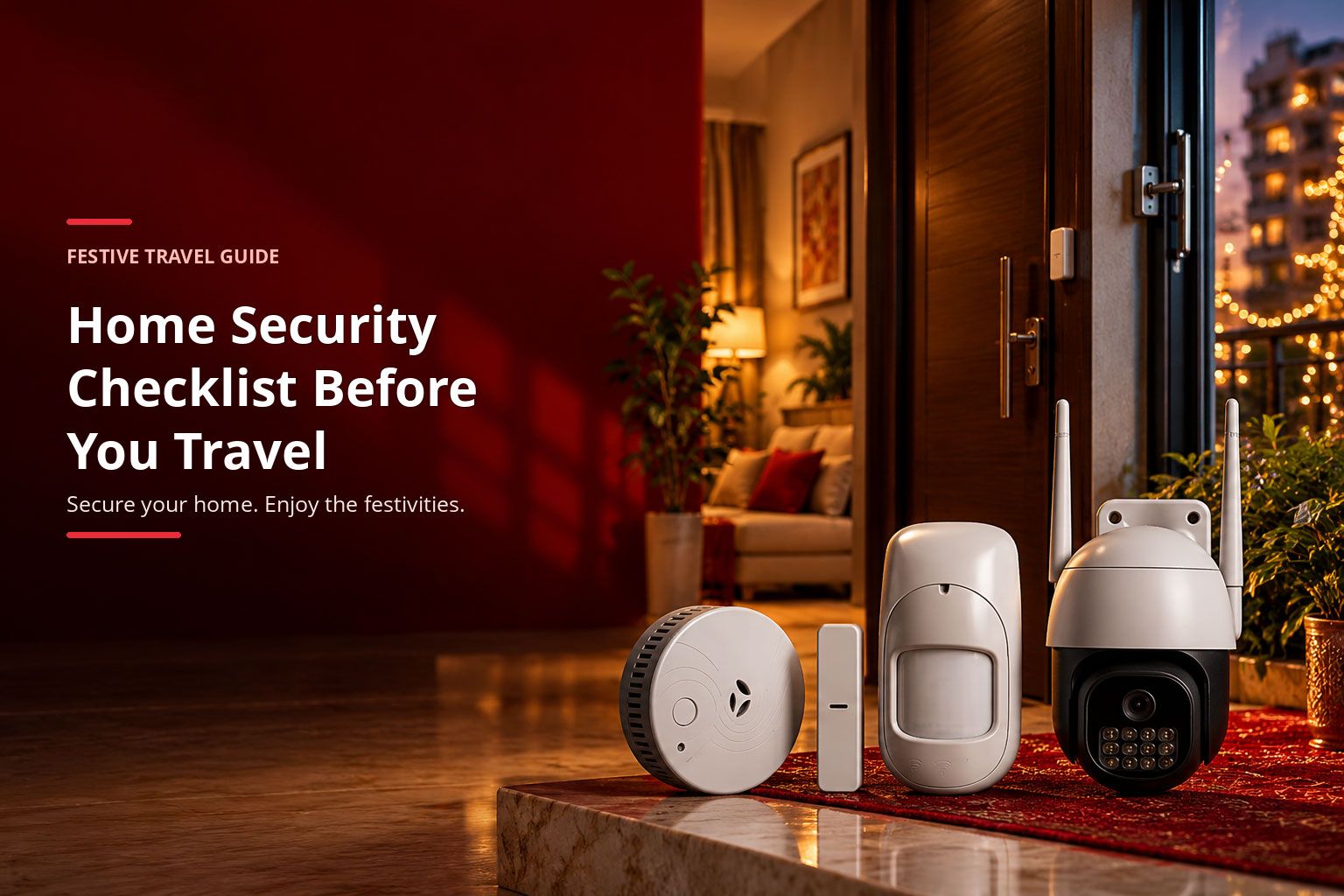
VProtect India, an SIS Group company offering monitored e-surveillance, follows a Detection, Monitoring and Response approach. Wireless door and window sensors, motion sensors, glass-break sensors and smoke or heat sensors detect what's happening at home. Alerts go to a 24x7 monitoring centre, where trained operators check each one before acting. If action is needed, trained response officers and coordination with emergency services follow, and you're kept informed.
That's the real value of monitoring for home security while on vacation: smoke from a forgotten extension board or a forced balcony door doesn't wait for your return to be noticed. You can see how VProtect monitoring works and the VProtect home security solutions for flats, independent houses and villas.
What should you check when you come home?
When you get back, take two minutes before you drag the suitcases in. Look at the main door and lock for scratches or damage. Check that windows and the balcony door are as you left them. If anything looks forced or out of place, step back outside, don't touch anything, and call the society office and the police before going in.
If all is well, switch the geyser and router back on, restart the deliveries, and disarm your system. Then, and only then, post the holiday photos.
Home security checklist at a glance
If elderly parents are staying back while the rest of the family travels, the same list applies, with one addition: make sure they have an easy way to call for help, such as a panic button that reaches more than one person.
Key takeaways
• Start your home security checklist a week early, so locks, electrics and sensors can be fixed in time.
• Make the house look lived-in: pause deliveries, use a light timer, and keep curtains half open.
• Switch off decorative lights, extension boards and the gas before you leave; festive fire risk is real in a locked home.
• Keep travel plans off social media until you're back.
• Locked house security works best when someone, not just your phone, will know if something happens.
Frequently asked questions about home security while travelling
How do I keep my house safe while I'm travelling?
Lock and check every door and window, return valuables to the bank locker or a proper safe, pause newspaper and milk deliveries, and switch off non-essential appliances and the gas. Use a light timer, tell a trusted neighbour, and avoid posting travel updates. A monitored security system adds someone watching while you're away.
What should I switch off before going on holiday?
Switch off the geyser, iron, microwave, washing machine, decorative lights and every extension board, and close the gas at the cylinder or main valve. Leave the fridge on only if it has food. If you use cameras or a security system, keep the router and that circuit powered, ideally with battery backup.
Should I tell my neighbours I'm travelling?
Yes, but only one or two people you trust, plus the society office or guard. Ask a neighbour to glance at your door every couple of days. Avoid announcing your travel dates in large building or colony WhatsApp groups, where you don't know everyone who's reading.
Is it safe to post holiday photos while I'm away?
It's safer to wait. Real-time posts, location tags and stories show that your home is empty, and you can't control who sees them once they're shared. Post the photos after you're back. Your friends will enjoy them just as much a few days later.
What are the best Diwali home safety tips if I'm travelling?
Unplug all decorative lights and extension boards, never leave diyas or candles burning, and keep jewellery and cash in a bank locker or safe. Pause deliveries, set a light timer, and ask a neighbour to check the door. If you have smoke detectors, test them before you leave.
How can I check on my home while I'm away?
Cameras with a phone app let you look in now and then, and a trusted neighbour can check the door in person. For round-the-clock cover, a monitored security system sends alerts to a 24x7 monitoring centre, where trained operators verify them and coordinate a response, instead of relying on you to notice.
Conclusion: travel light, worry less
A festive trip should be about family, food and a few days off, not about wondering whether the balcony door was latched. Spend half an hour on this home security checklist, and most of the common risks are handled before you leave.
For the rest of the trip, it helps to know someone is watching. If you'd like to see how monitored home security could work for your home while you travel, you can book a security consultation with VProtect.