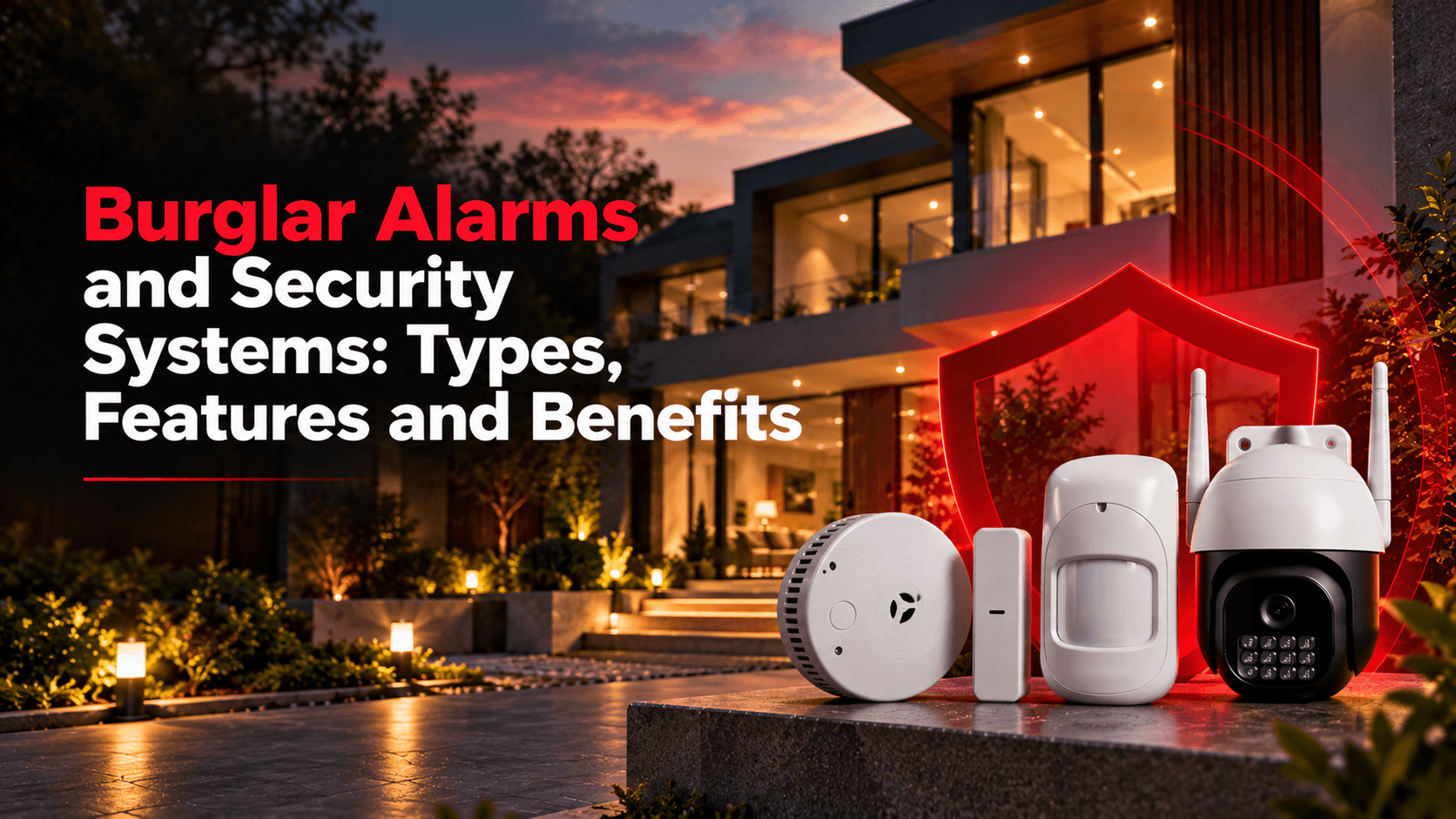

Quick answer:* A burglar security system is a set of sensors, a control panel and an alert device that detects unauthorised entry into a home or business. When a protected door opens or someone moves inside while the system is armed, it sounds a siren and sends an alert, either to you or to a monitoring centre that can respond.
A locked door slows someone down. It does not tell anyone they are trying. That gap is what a burglar security system fills: it notices an intrusion as it starts and makes sure someone finds out, whether you are asleep upstairs, at a wedding in another city, or have just pulled the shop shutter down for the night.
This guide explains the burglar alarm meaning in plain terms, how burglar alarms and security systems work, the main types, the features worth paying for, and how to choose a burglar alarm system in India for a flat, villa, shop or office.
What is a burglar alarm? (Burglar alarm meaning)
A burglar alarm is an electronic system that detects unauthorised entry into a property and raises an alert. In simple words, the burglar alarm meaning is this: a system that notices a break-in while it is happening and tells someone who can act.
The word "alarm" suggests a loud siren, and for decades that was the whole idea. Today a burglar alarm security system does more. It identifies which door, window or room was breached, sends that information to a phone or a monitoring centre, and can be part of a wider setup that also covers fire, smoke and personal emergencies.
That is why the two terms are now used almost interchangeably. The alarm detects and warns; the security system includes who checks the alert and how the response is organised.
How does a burglar alarm system work?
A burglar alarm system works by linking sensors at doors, windows and inside rooms to a central control panel. When the system is armed and a sensor is triggered, the panel sounds a siren and sends an alert to you or a monitoring centre.
The main components
Door and window contacts: Two-part magnetic sensors that report when a protected opening is opened.
Motion sensors: Usually passive infrared (PIR) devices that detect body heat moving through a room.
Glass-break sensors: Listen for the sound of a pane being smashed.
Control panel: The brain of the system. It receives signals, decides what to do, and sends alerts out.
Keypad and keyfob: Used to arm and disarm the system, at the door or from a small remote on your keychain.
Siren: An indoor or outdoor sounder that warns everyone nearby.
Panic button: Lets someone raise an alert manually in an emergency.
What happens during an intrusion
Armed: You arm the system when you leave, or arm only the perimeter at night.
Triggered: A door contact, motion sensor or glass-break sensor detects a breach.
Entry delay: The panel waits a few seconds, so a family member coming home can disarm it.
Alarm: If no one disarms it, the siren sounds and an alert goes out.
Verification and response: In a monitored system, trained operators check the alert and coordinate the right response.
What are the types of burglar alarm systems?
Burglar alarm systems are usually grouped two ways: by how they are connected (wired or wireless) and by who receives the alert (a local siren, your own phone, or a professional monitoring centre). The second choice matters more for how well the system protects you.
Wired burglar alarms
Sensors connect to the control panel through cables in walls or conduits. Wired systems suit new construction and large commercial sites where cabling is planned from the start.
Wireless burglar alarms
Battery-powered sensors talk to the panel by radio. Installation is quick and clean, which makes wireless the practical choice for most existing homes, rented flats and small shops.
Local (siren-only) alarms
The siren sounds on site and that is all. It may scare an intruder off, but it depends on a neighbour, chowkidar or passer-by noticing and choosing to act.
Self-monitored alarms
Alerts go to your phone through an app. You see what happened, but you are the one who has to judge it and respond, even if you are in a meeting or asleep in another time zone.
Professionally monitored alarms
Alerts go to a 24x7 monitoring centre. Trained operators check each alert and coordinate a response, such as response officers or emergency services, while also informing you.
Burglar alarm types compared
What features should a burglar alarm security system have?
A good burglar alarm security system should let you arm parts of the property separately, keep working through power cuts, warn you if it is tampered with, and send alerts to someone who can verify them. These features decide how the system behaves on an ordinary night, not just on paper.
Zones and partial arming: Arm the doors and windows at night while the family moves freely inside, or arm only the cash counter in a shop while staff close up.
Battery backup: Power cuts are routine in many Indian cities and towns. The panel and its communication link should keep running without mains power.
Tamper alerts: The system should report if a sensor is pulled off the wall or the panel is forced open.
Entry and exit delays: Short, adjustable delays prevent false alarms when you are leaving or coming home.
Panic button: A quick way for an elderly parent, a woman living alone or a shopkeeper to call for help.
Alert verification: Operators who check an alert before acting reduce false alarms and unnecessary call-outs.
Privacy controls: You decide which zones are actively monitored, so private rooms stay private.
Fire and smoke integration: Smoke and heat sensors on the same panel mean one system watches for more than intrusion.
What are the benefits of a burglar alarm system?
The main benefit of a burglar alarm system is early warning: an intrusion is detected as it begins, so there is still time to respond. A visible, working system can also make a property a less attractive target in the first place.
Detection at the entry point: Door and window contacts flag a breach before anyone reaches the valuables.
Coverage when no one is there: Locked flats during a hometown trip, shops overnight and offices over the weekend stay watched.
A clear record: The panel logs which sensor triggered and when, which helps when reporting an incident.
One system, several risks: The same panel can carry panic buttons and smoke or heat sensors.
Where a burglar alarm alone falls short
A siren that no one responds to is just noise, and a phone alert at 3 am is easy to miss. Many Indian homes and shops rely on a society guard or chowkidar, but one person cannot watch every door or see inside a locked flat. No alarm removes every risk; what matters is how quickly a real alert reaches someone who can act.
How VProtect India connects detection to response
VProtect India, an SIS Group company offering monitored e-surveillance, builds its service around three steps: Detection, Monitoring and Response. Wireless sensors, including door and window contacts, motion, glass-break and smoke or heat sensors, and a panic button, handle detection. An AI camera can flash a light and play a voice warning as a visible deterrent.
Alerts go to a 24x7 monitoring centre, where trained operators check each one before acting, which cuts false alarms. When action is needed, trained response officers and coordination with emergency services follow. Customers choose which zones are actively monitored, and the system stays passive until an alert needs action.
How do you choose a burglar alarm system in India?
To choose a burglar alarm system in India, start with the property and how often it is empty, then decide who should receive alerts. The right setup for a 2BHK in a gated society is very different from a jewellery store on a main road.
Before you decide, ask a few practical questions:
How often is the property empty, and for how long?
Will anyone be reachable at night or while travelling?
Does the system keep working through power cuts?
Can you arm some areas while others stay in use?
Who verifies an alert, and what happens next?
For more detailes VProtect home security solutions or VProtect solutions for shops and small offices.
Key takeaways
A burglar alarm detects unauthorised entry and raises an alert; a security system adds what happens after that alert.
Door and window contacts, motion sensors, a control panel, a siren and a panic button form the core of most systems.
Wireless systems suit existing homes and shops; wired systems suit new construction.
Who receives and verifies the alert matters more than the siren itself.
Frequently asked questions about burglar alarms
What is a burglar alarm system?
A burglar alarm system is a set of sensors, a control panel and a siren that detects unauthorised entry into a home or business. When a protected door opens or movement is detected while the system is armed, it sounds an alarm and sends an alert to the owner or a monitoring centre.
What is the difference between a burglar alarm and CCTV?
A burglar alarm detects an intrusion and raises an alert as it happens. CCTV records video, which is useful as evidence but usually acts only if someone is watching. Many properties use both: sensors to detect a break-in and cameras to show what happened, ideally connected to a monitoring centre.
Does a burglar alarm work during a power cut?
Most modern burglar alarms keep working during a power cut. Wireless sensors run on their own batteries, and the control panel usually has a backup battery. Check how long the backup lasts and whether the panel can still send alerts to your phone or a monitoring centre without mains power.
Can I install a burglar alarm in a rented flat?
Yes. Wireless burglar alarm systems need no wiring, and their sensors fix with screws or adhesive tape, so they suit rented flats and PGs. When you move, the system can be removed and set up again at the new place. Check with your landlord before drilling into walls or frames.
What is a monitored burglar alarm?
A monitored burglar alarm sends its alerts to a 24x7 monitoring centre instead of only sounding a siren or notifying your phone. Trained operators check each alert, contact you, and coordinate a response such as response officers or emergency services when needed. This reduces the chance of a real alert going unnoticed.
Is a burglar alarm system worth it in India?
A burglar alarm system is worth considering if your home is often locked during travel, if elderly parents live alone, or if you run a shop or office that stays empty overnight. Its value depends on the response behind it, so a monitored system offers more than a siren alone.
Conclusion: an alarm is only as good as the response behind it
Burglar alarms and security systems have moved well beyond a bell on the wall. The sensors notice an intrusion early; the real question is who learns about it and what they do next.
If you'd like to see how a monitored burglar security system could work for your home or business, you can book a security consultation with VProtect and talk through your property with the team.