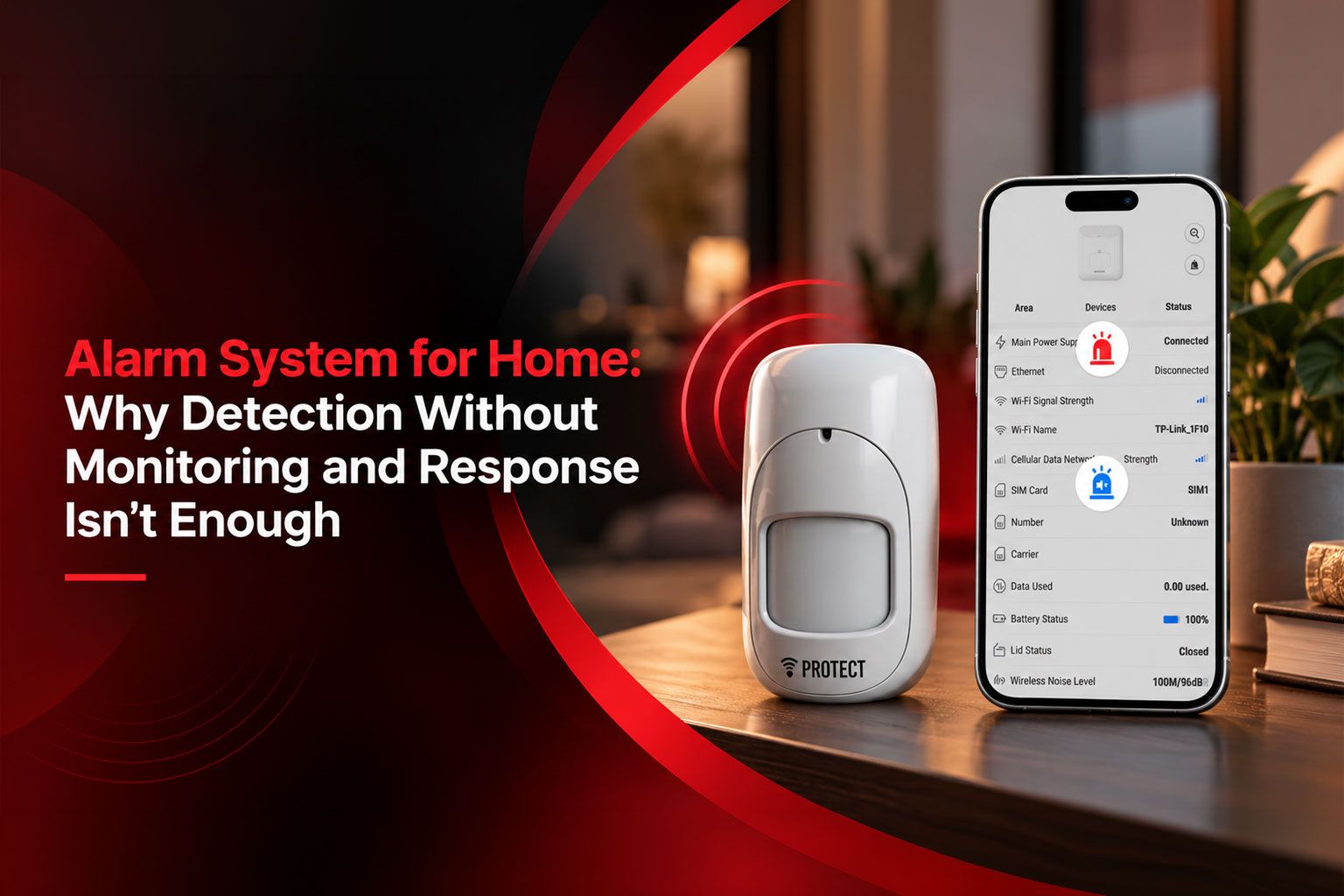

Alarm System for Home: Why Detection Without Monitoring and Response Isn’t Enough
An alarm goes off at 2:10 a.m.
Your phone receives a notification.
You are asleep.
By the time you see it, twenty minutes have passed.
This is the gap many homeowners discover only after installing a security device: detecting a threat and dealing with a threat are two very different things.
An alarm system for home can tell you that a door has opened, movement has been detected or somebody may be trying to enter the property. That information matters. But once the alarm is triggered, a more important question follows:
Who is watching, who verifies the situation and what happens next?
Modern home security cannot stop at detection. Real protection needs a connected process that moves from alert to monitoring, verification, deterrence and, when required, response.
That is what separates a simple alarm from a complete security system.
What Does an Alarm System for Home Actually Do?
At its most basic level, a home alarm system watches specific areas of a property for predefined events.
Depending on the setup, sensors may be placed near:
- main doors
- windows
- balconies
- driveways
- gates
- terraces
- passages
- lockers
- storage areas
- other vulnerable entry points
If a protected door opens unexpectedly or movement is detected while the system is armed, the alarm can trigger.
Traditional systems may sound a siren.
Connected systems can also send a notification to the homeowner.
More advanced setups may transmit the event to a professional monitoring centre where it can be reviewed and escalated if necessary.
The important distinction is what happens after the sensor detects something.
Detection is valuable.
Detection alone is not a response.
Why Detection Is Only the First Step
Imagine someone trying to force open a side window at your home while you are away.
A window sensor detects the attempt.
Your alarm sounds.
Your app sends a notification.
Technically, the security system has done its job.
But has the property actually been protected?
That depends on what happens next.
If nobody notices the notification, the intruder may continue.
If the siren does not discourage them, there may be nobody available to intervene.
If the homeowner is travelling, calling a neighbour or arranging help remotely can take valuable time.
This is why an effective security alarm system for home should be viewed as part of a security process rather than as an isolated device.
A stronger process looks like this:
Detect → Alert → Verify → Deter → Respond
Each stage solves a different problem.
Stage 1: Detect the Threat Early
The first job of any alarm system is to recognise that something is wrong.
Different sensors handle different kinds of risks.
Door and Window Sensors
These sensors identify when an entry point opens while the system is armed.
They are especially useful as doors and windows are a common entry point when attempted break-ins happen.
Some systems can also use shock or vibration sensing to identify attempted forced entry even before the door or window fully opens.
Motion Detectors Indoor or outdoor motion detectors can be used for monitoring areas and detecting unexpected movement.
They may be positioned around hallways, entrances, garages or other areas where movement should not occur at certain times.
Perimeter Detection
A strong security setup begins watching before a person reaches the building.
Sensors and cameras installed near gates, driveways, boundary walls and exterior access points can detect unusual movement at the property’s outer edge. A pan-tilt-zoom (PTZ) camera, which enables the monitoring team to scan a larger area and provide more detailed views of suspicious activity by zooming in, is an additional factor that contributes to the enhancement of this ability.
Smoke and Heat Detection
Home security is not limited to burglary.
Fire can become dangerous within minutes, particularly when residents are asleep or away from home.
A connected alarm setup may therefore include smoke or heat detection in addition to intrusion sensors.
VProtect’s residential security ecosystem combines wireless sensors, AI-enabled cameras and alarm devices to detect intrusion, fire and other emergency events around protected premises.
Stage 2: Make Sure the Alert Reaches Someone
This sounds obvious, but it is one of the biggest weaknesses in many DIY security setups.
A sensor detects a problem.
A notification is sent.
Then everything depends on the homeowner.
But people do not watch their phones every minute.
You may be:
- asleep
- driving
- on a flight
- in a cinema
- in an important meeting
- travelling abroad
- in an area with poor mobile connectivity
Your phone may also be silent.
If the entire security process relies on one person reading one notification at exactly the right moment, the system still has a vulnerable point.
Professional monitoring solves a different problem from detection.
The sensor answers:
“Did something happen?”
Monitoring answers:
“Is somebody paying attention when it happens?”
That difference is significant.
Why 24/7 Monitoring Changes the Value of an Alarm
A monitored security setup sends triggered events to a monitoring centre instead of depending entirely on the homeowner.
That means a trained person can receive and assess the alert even when the homeowner is unavailable.
VProtect states that its monitoring centre operates around the clock and that trained personnel verify triggered events before deciding how they should be escalated.
This creates continuity.
Your home does not suddenly become less protected because you went to sleep.
The system does not depend on you being available every second of the day.
For homeowners who travel frequently, live with elderly parents or leave children at home occasionally, that additional layer can be particularly important.
Stage 3: Verify What Is Actually Happening
Every alarm should be taken seriously.
But not every alarm is an emergency.
A door may have been opened by a family member who returned unexpectedly.
A worker may have entered a designated area.
An environmental condition may have triggered a sensor.
A false or misunderstood alert can lead to unnecessary panic.
That is why verification matters.
A monitored alarm system can allow trained personnel to assess information associated with the event and determine whether it appears to require escalation.
This is one place where technology and people work well together.
Sensors are excellent at detecting changes.
Cameras can provide visual context.
Humans are better at interpreting situations.
A strong security workflow combines all three.
VProtect describes alert verification as a way to reduce false alarms while helping genuine emergencies move toward faster action.
Stage 4: Deter the Intruder Before the Situation Gets Worse
People often think the purpose of a theft alarm system for home is to catch a burglar.
A better objective is to discourage the burglary from progressing at all.
This is where deterrence becomes important. An intruder usually prefers privacy, time and a low chance of being noticed.
A security system can remove those advantages.
Sirens
A loud external siren announces that the intrusion has been detected.
It attracts attention and tells the intruder that the property is not an easy target.
Security Signage Bright yellow external security signage mounted outside the house immediately indicates that the property is actively protected. The warning that’s on display acts as an initial deterrent and generally causes most potential intruders to think twice about attempting entry.
Lights and Audio Warnings
AI-enabled cameras and other devices may trigger lighting or audible warnings around a protected area.
The message is simple:
You have already been detected.
VProtect includes visible signage, sirens, AI cameras and audio warnings within its deterrence layer.
This is an important shift from traditional CCTV.
A conventional camera may quietly record the incident.
An active security system tries to influence what happens during the incident.
A Siren Is Useful, But What If the Intruder Does Not Leave?
This is where alarm-only security reaches its limit.
A siren may scare off an intruder.
Often, that may be enough.
But what happens when it is not?
Imagine someone attempts to enter an independent home late at night.
The alarm sounds.
The person continues trying to access the property.
The residents are inside.
At this point, the issue is no longer detection.
It is a response.
A complete security ecosystem needs a plan for that stage as well.
Stage 5: Respond When a Threat Is Confirmed
The most important question you can ask any home security provider is not:
“How loud is the alarm?”
It is:
“What happens after the alarm is verified?”
A monitored security system should have a defined escalation path.
Depending on the nature of the incident, response may involve:
- contacting the homeowner
- activating additional deterrents
- dispatching trained security personnel
- arranging on-ground assistance
- coordinating with police
- coordinating fire services
- coordinating medical assistance
VProtect’s published process describes alerts being detected by sensors, assessed by trained monitoring personnel and then moved into the appropriate response process. The company also lists quick mobilisation and civic coordination with police, fire and medical services as part of its security framework.
This is where an alarm starts becoming part of real-world security rather than simply an electronic warning.
What a Real Incident Could Look Like
Consider a family home at 1:35 a.m.
Everyone is asleep.
Someone approaches the rear entrance and attempts to force it open.
1. The sensor detects activity
A shock or entry sensor recognises unusual activity at the door.
2. The alarm is triggered
The event is immediately communicated through the security system.
3. Deterrence begins
The siren or another warning device activates.
The person outside knows the property is protected.
4. The monitoring centre receives the event
The alert does not sit unread on a sleeping homeowner's phone.
A trained professional receives it.
5. The alert is assessed
Available information is reviewed to understand whether the event appears genuine.
6. The incident is escalated
If a real threat is confirmed, the appropriate response process begins.
The power of the system comes from the chain.
No single sensor, camera or siren provides the complete protection.
The devices work together.
Why Wireless Alarm Systems Are Becoming More Practical for Homes
A wireless alarm system for home can make installation and expansion easier because sensors do not necessarily require extensive rewiring across the property.
Wireless devices can be positioned around different entry points and connected to a central control panel.
This can be particularly useful for:
- finished homes where major wiring changes are undesirable
- rental properties
- villas
- apartments
- homes that may need additional devices later
Wireless does not mean connectivity should depend on a single communication method, however.
A reliable alarm needs a dependable way to transmit alerts.
VProtect’s current device range includes wireless security sensors supported by control technology with LAN and GSM connectivity, along with backup power and health monitoring features.
That matters because the system should remain functional during the situations when you need it most.
What Happens During an Internet or Power Failure?
A home security setup should not be designed only for ideal conditions.
Internet connections fail.
Power cuts happen.
Devices lose battery.
These situations need to be considered before installation.
When evaluating a wireless alarm system for home, ask:
- Does the control panel support backup communication?
- Is there battery backup?
- Will I know if a sensor stops communicating?
- Can the system identify low battery conditions?
- Are alerts generated if equipment is tampered with?
- What happens if the primary internet connection is unavailable?
VProtect lists LAN and GSM connectivity, backup power, real-time health checks, instant alerts and tamper protection among the capabilities of its connected device ecosystem.
A security device cannot protect a home if nobody knows that it has stopped working.
Device Health Is an Overlooked Part of Security
Imagine installing a sensor on a back window.
Six months later, its battery is low or the device has stopped communicating.
You do not notice.
On the surface, your home still appears protected.
In reality, that particular entry point may no longer be monitored properly.
This is why device-health checks matter.
A connected security alarm system for home should ideally make problems visible before they create an unnoticed gap.
Security is not simply about installing devices.
It is also about knowing those devices are ready when needed.
A Theft Alarm System for Home Should Protect More Than the Main Door
Break-ins do not always happen through obvious entry points.
A proper security assessment should look at the property as a whole.
For an independent home, vulnerable areas might include:
- front gates
- side passages
- balconies
- terrace access
- rear doors
- ground-floor windows
- garage entrances
- storage areas
Inside the property, homeowners may also want protection around lockers, valuable storage or other sensitive locations.
The right setup depends on the home's layout.
There is no universal number of sensors that fits every property.
A two-bedroom apartment and a large independent villa should not be secured using identical plans.
What Should You Look for in an Alarm System for Home?
Do not begin with the number of devices.
Begin with the security process.
1. Early Detection
Can the system identify suspicious activity at vulnerable entry points before the situation progresses?
2. Reliable Alert Transmission
Does the system have dependable connectivity and backup options?
3. Professional Monitoring
Who receives an alert if you do not see the notification yourself?
4. Alert Verification
Is there a process for separating genuine threats from harmless triggers?
5. Effective Deterrence
Does the system do anything to discourage an intruder once suspicious activity is detected?
6. On-Ground Response
If a threat is confirmed, who actually responds?
7. Device Health
Does the system identify communication failures, low batteries or tampering?
8. Emergency Coverage
Can the setup support fire, panic or medical situations in addition to theft?
These questions reveal much more about a security system than camera resolution or siren volume alone.
Alarm System vs CCTV: They Solve Different Problems
CCTV and alarm systems are often discussed as if one needs to replace the other.
They perform different jobs.
CCTVConnected Alarm SystemProvides visual surveillanceDetects specific security eventsRecords activityGenerates immediate alertsUseful for evidenceUseful for early warningOften requires manual observationUses sensors to identify predefined threatsMay work as a standalone deviceCan connect with monitoring and response
The strongest home security setup can use cameras and alarm sensors together.
The sensor identifies the event.
The camera adds context.
Monitoring verifies what is happening.
The response process handles the situation if necessary.
Frequently Asked Questions
What is an alarm system for home?
An alarm system for home is a network of sensors and alarm devices designed to identify security events such as unauthorised entry, movement or forced access. Connected systems may also send alerts to homeowners or professional monitoring centres.
What is a security alarm system for home?
A security alarm system for home combines sensors, a control panel and alarm devices to protect selected entry points and areas. More advanced systems can include cameras, professional monitoring, alert verification and response support.
How does a theft alarm system work?
Thief alarm systems for home use sensors around doors, windows, perimeters or other sensitive areas. If the system is armed and suspicious activity or forced entry is detected, it can trigger an alarm and create an alert.
What is a wireless alarm system for home?
Wireless home alarm systems use wireless communication between the security sensors and the control panel, reducing the need for extensive wiring. It can be useful for apartments, villas and existing properties where major electrical changes are inconvenient.
Is an alarm system enough to stop burglary?
An alarm can deter many intruders, but no alarm can guarantee that a burglary will be prevented. Monitoring, verification and an established response process provide additional layers when an intruder does not retreat.
Why is professional monitoring important?
Professional monitoring means a triggered alarm can receive attention even if the homeowner is sleeping, travelling or unable to check the phone.
What happens after a monitored alarm is triggered?
The exact process depends on the provider. Typically, the alert reaches a monitoring centre, is assessed and, if a genuine threat is confirmed, is escalated according to the provider's response procedure.
Can an alarm system also detect fire?
Yes, if smoke or heat detectors are integrated into the security system. These devices can raise alerts when dangerous fire-related conditions are detected.